How TOEFL scoring works on the 1 to 6 scale

Every section converts on its own curve. Read the full ETS chart, then see what the scoring guides look for.

One scale. Four conversions. One rounding rule.

Fig 1 · The new scale

Every section is scored 1 to 6

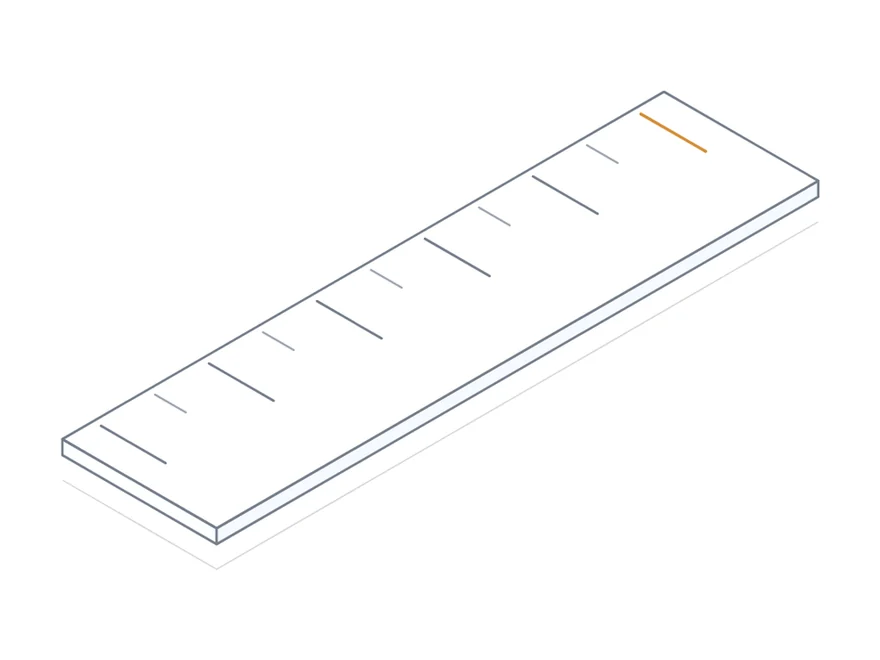
Since January 2026, Reading, Listening, Writing and Speaking each report a band from 1 to 6 in half steps, eleven bands in all. The total uses the same scale, so neither the old 0 to 120 nor the paper test's 600 applies.
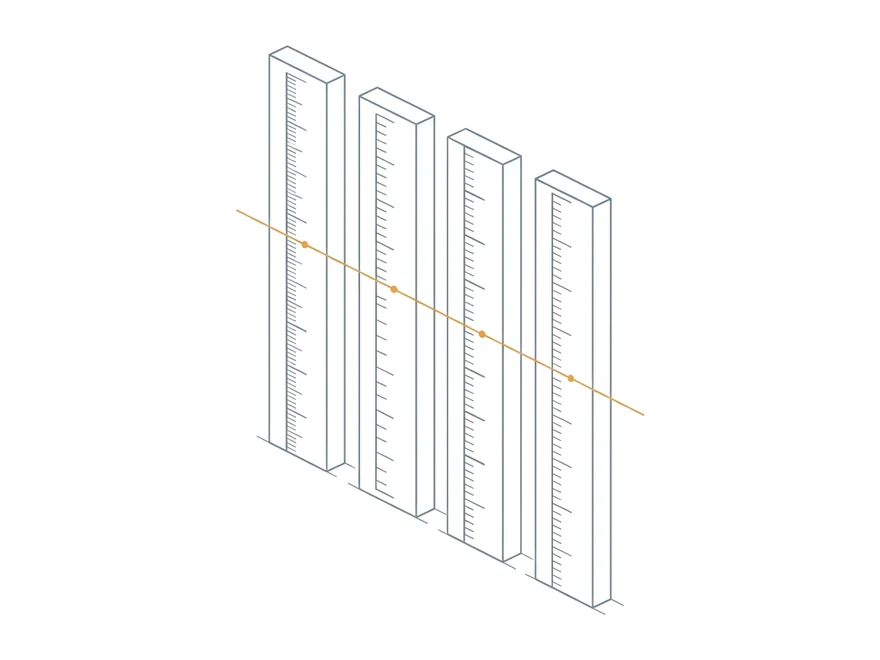
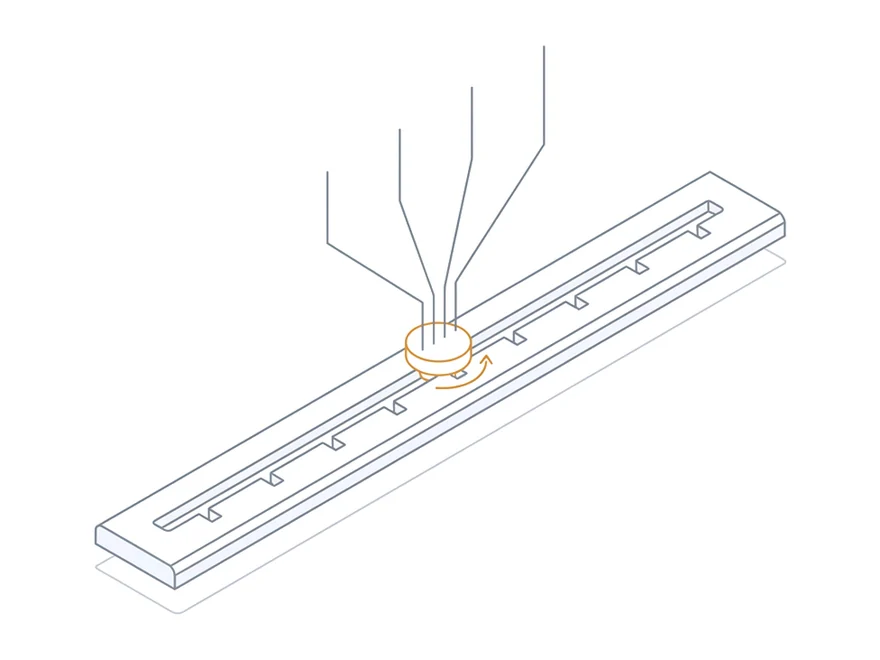
Fig 2 · The conversion

One old score, four different bands

Every band lines up with a range on the old 0 to 30 section scale, and the cut-offs differ by section. A 22 on the old scale is a 4.5 in Reading but a 5.0 in Listening — each section runs its own conversion curve, with its own cut-offs.

See the full table ↓
Fig 3 · The total

An average, rounded to the half band

Average the four section bands and round to the nearest 0.5. No section is weighted and none is dropped. ETS's own examples: an average of 5.125 becomes 5.0, and 5.25 becomes 5.5.

The official ETS conversion, band by band

Each row is one band on the new 1 to 6 scale, its CEFR level, and what it was on the old scale.

New 1 to 6 band, CEFR level, and the old 0 to 30 section and 0 to 120 total scores.
BandCEFRReading0-30Listening0-30Writing0-30Speaking0-30Total0-120
6.0C229-3028-3029-3028-30114-120
5.5C127-2826-2727-2827107-113
5.0C124-2622-2524-2625-2695-106
4.5B222-2320-2121-2323-2486-94
4.0B218-2117-1917-2020-2272-85
3.5B112-1713-1615-1618-1958-71
3.0B16-119-1213-1416-1744-57
2.5A24-56-811-1213-1534-43
2.0A234-57-1010-1224-33
1.5A122-33-65-912-23
1.0A10-10-10-20-40-11

ETS publishes each old total as a starting point, such as 95 and up for a 5. Each range here ends one point below where the next band starts. Source: ETS, TOEFL score scale update.

How ETS scores speaking and writing. One score per answer, against a published guide.

For every speaking and writing task, ETS publishes a scoring guide that describes what an answer at each level sounds or reads like. Each of your answers gets a single score from 0 to 5 against it, and those scores become your 1 to 6 band. The guide does not score the parts separately; it describes what they look like together. Below is what it looks for.

Source: ETS Speaking Scoring Guide and Writing Scoring Guide, © 2025 ETS.

Speaking. Three things the scoring guide listens for.

Every spoken answer gets its own score from 0 to 5.

Say everything the task asks for, and stay on the point.

  • The whole meaning. Not most of the words, but what they add up to.
  • On the point. Everything you say answers what was asked.
  • Nothing important missing. Lower answers drop a key part, then most of it.

Easy to follow the first time, with no effort from the listener.

  • Clear pronunciation. Words come through clearly; none have to be guessed.
  • Rhythm and intonation. Stress and pitch carry the meaning instead of blurring it.
  • A steady pace. Pauses land where a speaker would naturally pause, with few fillers.

The right words and grammar to say exactly what you mean.

  • Small words and endings. Articles, prepositions and tense or plural endings are right.
  • Enough range. Enough vocabulary and sentence patterns to be precise, not just general.
  • Few mistakes. Rare enough that the meaning never blurs.

Writing. Three things the scoring guide reads for.

Every written answer gets its own score from 0 to 5.

Development

Relevant ideas, each backed by an explanation, an example or a detail. Lower answers leave part of that support missing, unclear or off the point.

Language

Varied sentences and precise, natural word choice, in your own words. At the bottom, most of the usable language is borrowed from the prompt.

Accuracy

Almost no errors beyond the slips anyone makes under time, like a common typo or their for there. Errors that pile up pull the score down.

Frequently asked questions

What is the TOEFL score range in 2026?

Each section is reported from 1 to 6 in half steps, and so is the total, for tests taken on or after 21 January 2026. The 0 to 120 range is retired as the primary score, but reports still print it alongside the new band through the two-year transition, which runs until January 2028.

Is the TOEFL max score 600?

No. The paper based TOEFL (PBT), retired well before the current scale, ran 310 to 677 — its maximum was 677, not 600, which is just a commonly quoted reference point on that scale. The maximum today is 6. The 120 figure people still quote is the previous internet based scale, four sections of 30.

How is the TOEFL total score calculated?

It is the average of your four section scores, rounded to the nearest half band. ETS gives two examples: an average of 5.125 reports as 5, and an average of 5.25 reports as 5.5.

How do I convert a band back to the old 0 to 30 score?

Find your band in the chart above and read the column for your section. Use the section column you actually need: a band covers a different old-scale range in Reading than it does in Speaking, so a single all purpose conversion table is wrong by construction.

What CEFR level does my band map to?

CEFR is decided by the band alone, so it is the same in all four sections. Bands 5.0 and 5.5 are C1, 4.0 and 4.5 are B2, 3.0 and 3.5 are B1, and 6 is C2.

How does TOEFLAIR AI scoring relate to ETS?

TOEFLAIR reports on the same 1 to 6 scale ETS publishes, so a practice band is directly comparable to a section score. The judgment behind it is ours, not an ETS service, and it is practice feedback rather than an official result.

Put a band on your own answer

Practise a real task, get a band on the same 1 to 6 scale, and see which layer cost you the points.

Start practicing free

Free plan available