


MySpeakingScore and TOEFLAIR both score TOEFL Speaking on the same scale ETS uses today: a 1–6 band, aligned to the CEFR, in 0.5-point steps. Neither is running an outdated rubric. What actually splits them is narrower and more useful to know before you pick one: how much of the exam each one practices, and how you pay for the practice.
We read both products’ own pricing, scoring, and product pages directly on 2026-08-12 to write this. Here’s what each one actually offers.
Scoring: One Band, Two Vendors
MySpeakingScore scores TOEFL Speaking on a 1–6 band, aligned to the CEFR, broken into subscores that vary by task type (see the Feedback section below for exactly which). Its SpeechRater page describes the underlying engine as ETS’s own automated scoring technology. Internally, each response is scored on MySpeakingScore’s own 0–5 task-level scale first, then converted to the reported 1–6 band, a conversion it names but doesn’t spell out in detail.
MySpeakingScore, founded by John Healy, says it licenses ETS’s automated scoring technology. Elsewhere on its own site, it also states that it’s independent: not affiliated with, endorsed by, or sponsored by ETS.
TOEFLAIR scores every Speaking response holistically on the same official 1–6 band, in 0.5-point steps, against the ETS 2026 rubric. There’s no separate internal scale to convert from. Writing is scored across four named dimensions (task achievement, coherence, lexical resource, grammar), each on the same 1–6 band.
Rubric access isn’t the differentiator here. MySpeakingScore already moved to the current scale. What differs is scope, next.
Coverage: Speaking Only, or Speaking and Writing
MySpeakingScore’s homepage offers exactly two things: Interview (4 questions, about 5 minutes) and Listen & Repeat (7 prompts, about 2 minutes), the two Speaking task types in the 2026 TOEFL. There is no Writing product on the site, no Reading, no Listening.
TOEFLAIR covers four task types today: Listen & Repeat, Take an Interview, Write an Email, and Academic Discussion. Those four span Speaking and Writing, the two sections TOEFL restructured most in 2026. Our own pricing page states plainly that Reading and Listening are next, not yet shipped.
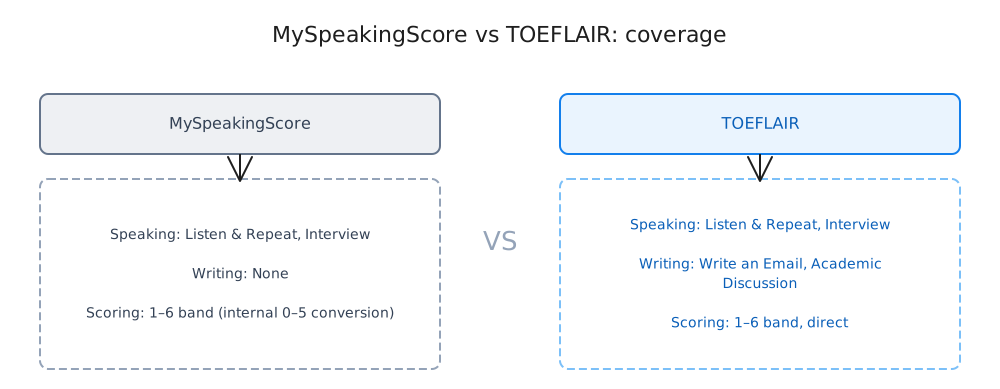
If Speaking is your only gap, MySpeakingScore’s narrower focus isn’t a weakness. It’s the whole product. If Writing is also on your plate, it isn’t on theirs at all.
Feedback: A Tip, or a Cause
MySpeakingScore’s report for a single task lists every prompt with its own score, plus task-level subscores that differ by task type:
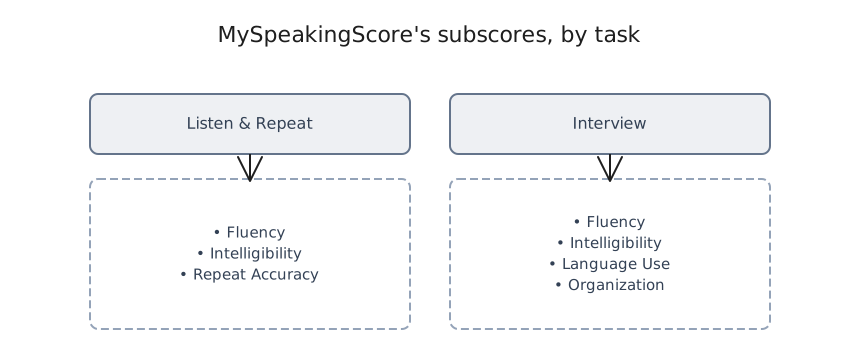
Beyond the score, the report names one specific thing to work on next and credits what’s already working. It also describes the pattern behind the weak spot — in the demo we watched, a tendency toward micro-hesitations at speed — and lets a reader ask follow-up questions about their own score directly in the report.
TOEFLAIR classifies each miss by cause before suggesting anything, not after. Every Listen & Repeat error is tagged pronunciation, listening, or expression. The repractice is then scoped to the flagged word or phrase rather than the whole sentence, and graded STILL, IMPROVED, or FIXED against the original attempt. The full case for why is in one score, three problems.
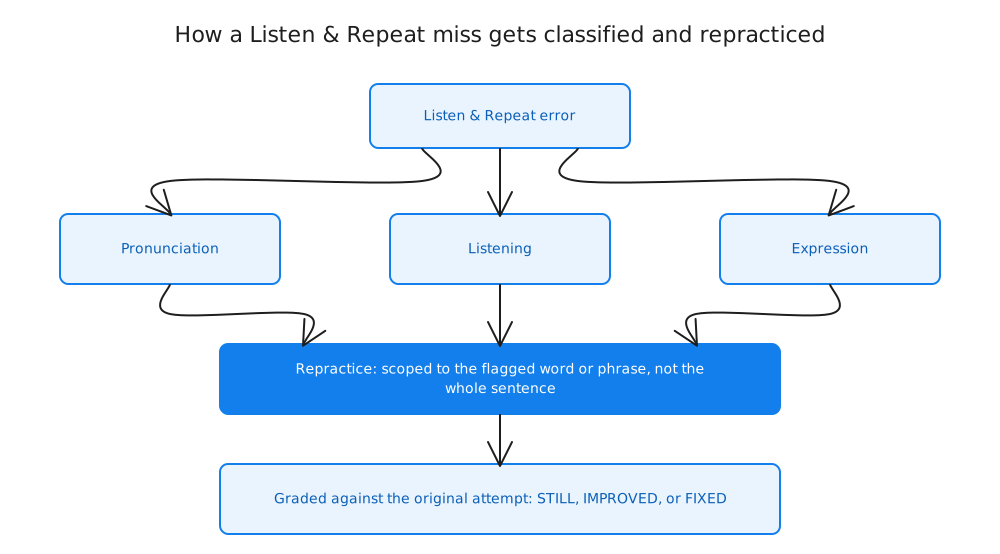
Take an Interview runs the same way one level up, naming the move inside an answer that cost the point rather than restating the answer’s overall score (why memorizing fails the TOEFL interview).
One report tells you what to work on. The other tells you why you missed it, and lets you drill that exact thing.
Free Tier: One Attempt, or Five to Six Practice Sets Each
MySpeakingScore’s free tier is one full test, no card required. Getting to it does require creating an account first, either through Google sign-in or an emailed one-time code. There’s no way to record a practice response before signing up.
TOEFLAIR’s free tier gives 5–6 practice sets per practice type: Listen & Repeat, Interview, Email Writing, and Academic Discussion. Every set gets full AI feedback, and no card is required.
MySpeakingScore’s free tier goes deep on one task; TOEFLAIR’s goes wide across all four. Neither is a stripped-down demo — both run the same scoring engine the paid tier uses.
Paying: By the Test, or Once
MySpeakingScore charges by volume; TOEFLAIR charges by time. The clearer way to compare them isn’t a price list — it’s which usage pattern each one is actually built for.
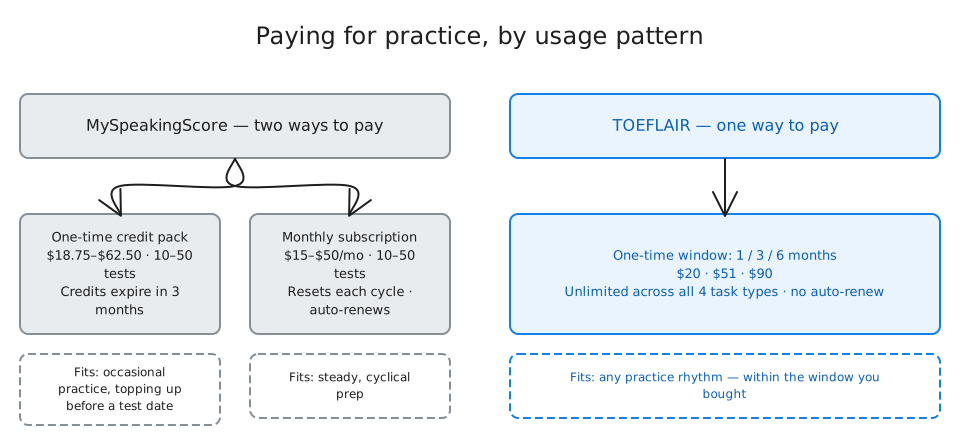
MySpeakingScore’s monthly plans run $15 to $50 for 10 to 50 full tests a cycle, with credits that refresh each billing period — built for steady, cyclical prep. Its one-time credit packs run $18.75 to $62.50 for 10 to 50 tests, though unused credits expire after 3 months — built for occasional practice or a pre-test top-up.
TOEFLAIR’s one-time windows run $20 for 1 month, $51 for 3 months ($17/month), or $90 for 6 months ($15/month). Whichever window you buy, practice across all four task types is unlimited inside it, so the same price fits daily drilling or occasional use. Our pricing page states it directly: “All paid plans are one-time purchases. No subscriptions, no hidden fees.”
A practicer doing 10 tests a month is priced almost identically either way. Someone drilling daily gets more from an unlimited window; someone practicing occasionally and staying Speaking-only may spend less on a small MySpeakingScore credit pack.
Which One Fits You
Pick MySpeakingScore if Speaking is your entire gap. Practicing occasionally or topping up before a test date favors its one-time credit pack; steady, cyclical prep favors its monthly subscription.
Pick TOEFLAIR if you need Writing feedback alongside Speaking, or you’d rather not match your rhythm to a pricing shape at all — one window covers any practice rhythm. Our best TOEFL AI feedback tools roundup rates five platforms on feedback depth if you’re still comparing options beyond these two.
Start free at toeflair.com — 5–6 practice sets per task type, full AI feedback, no card required.
Further reading
- My Speaking Score — homepage and pricing, checked 2026-08-12
- How Is TOEFL Speaking Scored in 2026? The Rubric, Decoded — MySpeakingScore’s own scoring explanation
- ETS — About the TOEFL iBT test